



Saving for your dream trip without going into debt is an admirable goal. The key to achieving it is preparation. Whether you prefer backpacking or an all-inclusive resort, you've got everything you need to turn this project into a concrete plan. Here are 10 painless strategies for building your travel fund, one dollar at a time.
01Estimate your total travel costs
One of the most common questions people have about travel planning is how do I know how much to save for a trip? To avoid surprises, it's important to itemize your planned expenses.
So, how much money do you need to travel? It depends on your destination and comfort standards, but your calculation should include:
- Transportation: flights, train tickets, gas, parking.
- Accommodation: hostels, hotels, campsites, or short-term rentals.
- Food: the most commonly underestimated travel expense!
- Activities: tours, museums, shows, excursions.
- Surprise expenses: lost luggage, pharmacy bills, impulse purchases.
To be safe, add a buffer of 10% to 15% to your total budget. That way, you won't have to rely solely on your credit card to cover unexpected costs.
02Calculate your actual savings capacity
You can't know where you're going if you don't know where you're starting from. Before you book anything, you need to make a budget so you know how much room you have to maneuver.
Make a list of:
- Income: salary, tips, self-employment income, etc.
- Your fixed expenses: housing, transportation, insurance, subscriptions.
- Your variable expenses: groceries, outings, clothing, small purchases.
The difference between what goes in and what comes out is your current savings capacity.
Does that amount seem low? It's not a failure, it's a starting point. Take it as a sign that you need to make some changes to your spending habits so you can put more towards your travel plans.
03Calculate how much to set aside each month
It's all about psychology: Setting a concrete date makes your plans feel more real. "Someday" doesn't spur you to action; "next November" does. Let's say you're aiming to leave for your trip in 12 months. The idea is to start from your date of arrival and work backwards.
Now, you'll be able to calculate the amount you'll need to set aside each month.
- Take the total estimated cost from the previous step.
- Divide this amount by the number of months or pay periods before you leave.
- This will give you the exact amount you'll need to save each period.
If this number is too high, then you have to make the decision to push back your departure date, lower your travel costs, or do both. This approach will help you transform your dreams into a concrete number to aim for.
04Open a dedicated account
The classic mistake is leaving your travel fund in your chequing account, where you may dip into it without realizing.
The best strategy? Keeping your travel savings separate from the rest of your money.
- Open a dedicated savings account for your travel goals.
- Give it a motivating nickname (e.g., Japan Trip).
- Make sure it's not attached to a debit card.
A TFSA (tax-free savings account) could be a good option for this type of medium-term goal. Your savings grow tax-free, and you can withdraw your money without penalty if your plans change. Every dollar deposited is clearly designated for your travel goals.
Are you already saving in a TFSA for another purpose, such as retirement? Check your available contribution room in your Canada Revenue Agency account.
Sample calculation: The impact of returns on your savings
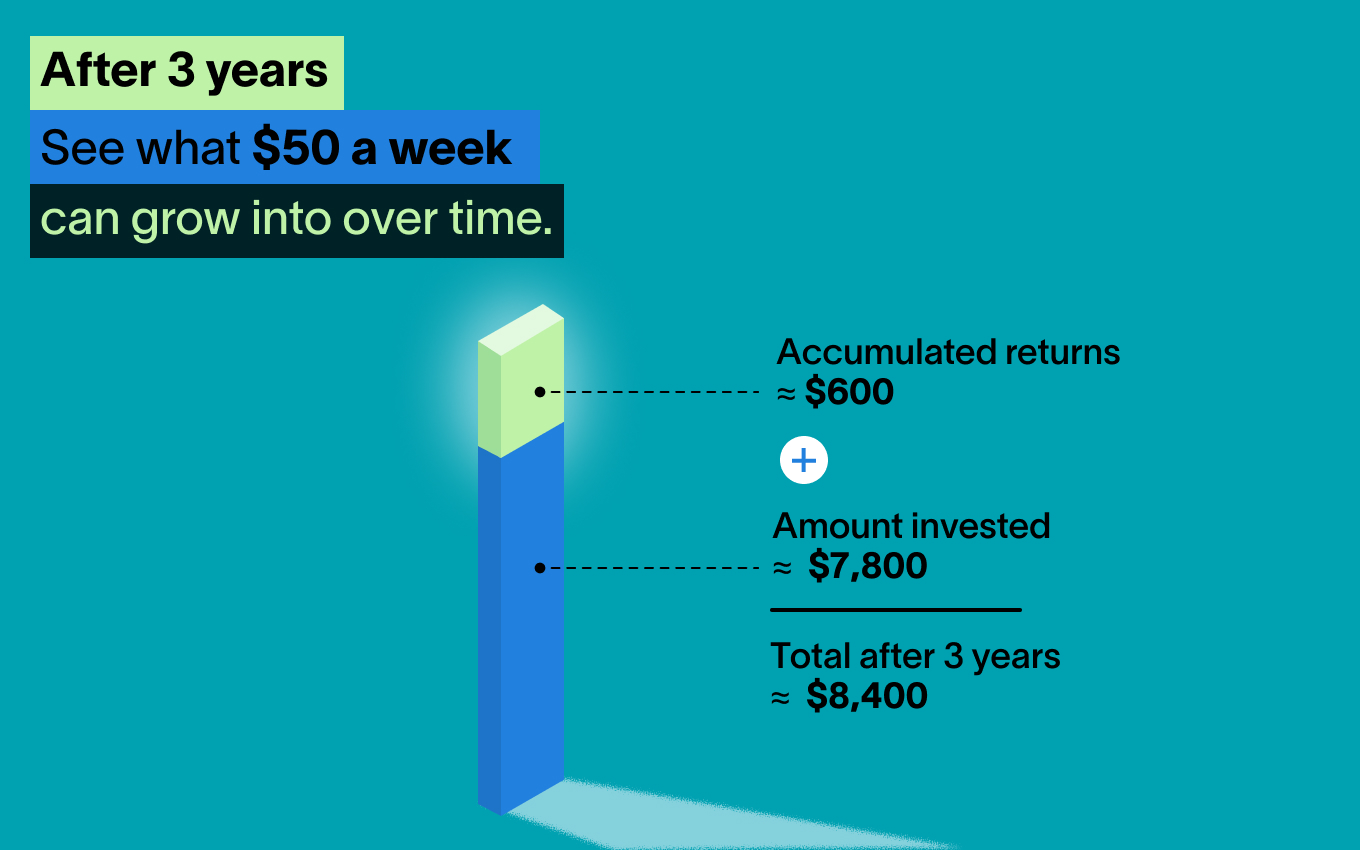
Let's say you're planning a big trip for your 30th birthday three years from now. You invest $50 a week in a TFSA, with a hypothetical average annual return of 5%.
After 3 years:
- Total paid out of pocket: approximately $7,800
- Accumulated interest: approximately $600
- Total available funds: approximately $8,400
That $600 is the equivalent of a few nights in a hotel or extra experiences, all paid for by time.
05Automate your transfers for effortless savings
This is the most powerful tip of all. Rather than waiting to see what's left at the end of the month, decide in advance how much you want to spend on travel and automate it.
Schedule an automatic transfer on your payday. This technique is known as "paying yourself first." This allows you to save before you spend, and your savings happens automatically in the background. For example, $75 per payday (every two weeks) can add up to nearly $2,000 in a year. Simple and effective.
06Simulate different scenarios
To simulate your plan, enter your goal, your savings amount, and your timeline into a planning tool, such as an online calculator. The goal is not just to get a result, but to explore different scenarios.
Try increasing or decreasing your monthly savings, moving your timeline up or back, or adjusting your goal. By comparing these scenarios, you can quickly see the trade-offs and identify what has the biggest impact. This approach helps you make an informed decision and build a plan that is realistic.
06Simulate different scenarios with My Game Plan
My Game Plan is more than a calculator; it's a planning tool that provides a clear picture of your finances. It's available free of charge to anyone who saves with the Fonds or FlexiFonds products, via their online account.
Simply enter your goal, the amount you want to save, and your timeline. The tool then analyzes your situation and suggests different strategies: how much to save, a realistic timeline, possible adjustments. Watching your progress bar fill up is an excellent source of motivation.

My Game Plan also allows you to coordinate savings for this trip with those for your other plans (buying a house, retirement, etc.). It's ideal for ensuring that today's indulgences don't compromise your financial security tomorrow.
07Save on gear
Waiting until the last minute to buy what you need for your trip can cost you a pretty penny. Instead, try these smart strategies:
- Watch for end-of-season sales: Buy your coat or sandals when stores are clearing out stock.
- Visit second-hand stores: You'll find gently used equipment at a fraction of the price.
- Borrow: Friends and family may have tents, backpacks, or travel adaptors gathering dust in their closets.
Every dollar you save on gear is an extra dollar you can spend during your trip.
08Invest your unexpected income
Tax refunds, bonuses, cash gifts . . . These little windfalls often get eaten up by everyday expenses. However, they are a great way to turbo-charge your savings.
Just follow this simple strategy: As soon as the money arrives, transfer some (or all of it) directly into your travel account. Treat these funds as savings boosters that will help you reach your goal earlier than expected.
09Maximize your credit card points and rewards
If you're able to pay off your credit card in full every month (it's essential!), use it to your advantage.
Choose a card that offers points or travel discounts and use it at the grocery store, gas station, and pharmacy. You'll earn points that can be exchanged for flights or hotel stays without increasing your expenses. That means creating value out of money you've already spent. Note: This strategy is only worthwhile if you never pay interest on your balance.
10Ask for contributions to your travel fund as a gift
Is your birthday or Christmas coming up soon? Tell your loved ones that you'd prefer a contribution to your travel fund over a physical gift.
Create a small fund or suggest a joint gift. That's what Alexandra and Thomas did: instead of exchanging gifts, they invested the money in their joint project of turning a minibus into an RV. Every contribution becomes part of your future memory.
Final tip: Keep your eye in the prize
Sometimes our goals seem far away, and discouragement sets in. At times like these, remember that discipline is the key to freedom. Do an annual review to take stock of your progress. Check to see if your savings are growing as planned, and if needed, make adjustments.
Take inspiration from successful savers like Melissa, who restructured her finances to travel to Africa. By sticking to her savings plan despite the temptations of everyday life, she turned a dream that seemed out of reach into a very real plane ticket. If you're planning a longer break, read our tips for financing a sabbatical.
The world is a big place, and your ability to explore it often depends on a simple first step: making a plan. By setting your budget straight and using the right tools, ambition becomes attainable.
Bon voyage!